Why Champagne is the number one choice for weddings and celebrations

bride and groom clinking glasses of champagne

Champagne naturally goes hand in hand at weddings and there is no shortage of creative ways to share the pinnacle of sparkling wine.

The Champagne Bureau UK*, has included useful tips below on how to best serve Champagne at a wedding and help select the right style for the occasion...

Using the correct glassware
Whilst trends come and go and flutes have commonly been thought of as the crème de la crème - a tall, rounded, tulip-shaped glass is the perfect choice and expertly shows off your Champagne's aromas and bubbles.

Chill your Champagne
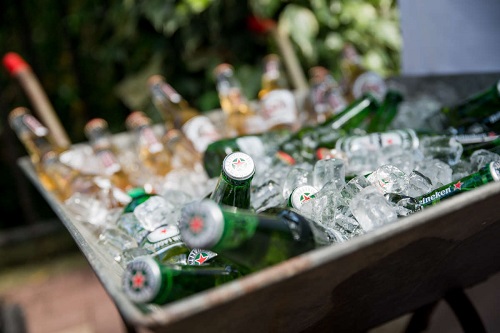
Chilling Champagne is essential to enjoy the full extent of its finesse. The best way to chill a bottle of Champagne is to plunge it into an ice bucket half filled with water and ice for around 30 minutes until it reaches a temperature of 8 to 10 degrees Celsius. If you are running short on time, add two tablespoons of salt to the cold water. This will bring your bottle to the perfect temperature within 30 minutes.

How to open and serve your Champagne
The blunt pop of the cork and the fizz of the fine bubbles – instantly reminiscent of celebration – is a sparkling start to any celebration. But how do you open a bottle of Champagne correctly? After removing the wire cage and foil cap keep a firm hold on the cork, hold the bottle, and tilt it to a 30-45° angle, being careful to point it safely away from anyone. Gently rotate the bottle until the cork slowly pops out. To correctly pour your Champagne, start with a small amount into your tulip shaped glass and let it sit for a few moments. Then, slowly fill up the rest of the glass until it is two-thirds full. Do not take the person's glass when pouring. Notice the effervescence and the forming of the "pearl necklace" on the surface of the Champagne. Now it is time to enjoy!

Vintage Champagne 
The most suitable companion to exceptional occasions, intimate gatherings, and memorable and magical moments in life. A Vintage Champagne is made from grapes collected from a single harvest and therefore does not contain any reserve wines. A producer will decide to make a vintage wine when the harvest has been outstanding in a particular year. Vintage Champagnes are usually matured for four to ten years and exhibit nutty and toasted aromas, as well as honey and stewed fruits. These wines are known for being full of character which makes them a wonderful addition to any stage of your celebration.

Rosé champagne
With its pinkish hue, a Rosé Champagne has more colour and body than regular Champagne. It is made either by macerating black grapes or by blending with red Champagne wine. Not only does Rosé Champagne have an 'instagrammable' appeal but it also offers lively fruit aromas that blend perfectly with the richer types of foods such as lobster and poultry.

Champagne Sec or Demi-Sec
It is hard not to include dessert in a wedding breakfast menu. If you choose a sweeter Champagne, i.e., sec, or demi-sec, then it will pair wonderfully with creamy or fruit-based desserts and puddings, as well as sweet pastries (but avoid pairing it with chocolate desserts). A Champagne Sec is a Champagne containing between 17 and 32 grams of sugar per litre. A Champagne Demi-Sec contains between 32 and 50 grams of sugar per litre. 

Non-vintage Champagne Brut
By nature, non-vintage Champagne pairs with everything, also making it an excellent option for your wedding day festivities. It is the most common Champagne but if you want more specific pairing advice at a venue, the sommelier will always be at hand to advise you accordingly.

*the Champagne Bureau UK is the representation of the Comité Champagne in the UK, a trade association representing Champagne Growers and Houses

You may also be interested in

New app launches to simplify one of marriage’s biggest admin headaches

New app launches to simplify one of marriage’s biggest admin headaches

Changing your name after marriage can mean updating details with countless organisations, from banks and subscriptions to official documents and employers. New app Name Change Navigator aims to make the process easier, guiding newlyweds through each step from one platform. Founded by Rebecca Dainton, Head of Product at Flutter UK & Ireland, the app was created to reduce the stress and mental load associated with name changes. It supports a range of naming journeys, including traditional surname changes, double-barrelling, blended surnames and other choices following marriage, civil partnership, divorce or personal identity changes. The launch comes as younger generations increasingly rethink traditional naming conventions, with technology offering a more streamlined approach to this often-overlooked part of newlywed life.

READ ARTICLE

Something borrowed, something blue’ is out – but 1 in 4 Brits still value wedding cards

Something borrowed, something blue’ is out – but 1 in 4 Brits still value wedding cards

New research from Moonpig reveals the top wedding card writing confessions. A whopping 30% of Brits admit to defaulting to a safe "congratulations!" because they simply can't think of anything else to say. This is followed by recycling the same message for different couples (11%) and signing a card without knowing what your partner has written (8%). What's more, when stuck for words, one in 10 (8%) admit to turning to AI for inspiration - this rises to one in seven (14%) among 25–34-year-olds. Brits are not alone in facing this wedding card conundrum. More than half of Brits (55%) admit they have struggled with at least one aspect of wedding message writing. Nearly one in four find wedding cards (23%) or guest-book messages (24%) difficult, while one in five (20%) hit writer's block when preparing the all-important wedding speech.

READ ARTICLE

The YouGov Big Survey on Weddings

The YouGov Big Survey on Weddings

The journey that begins with "will you marry me" and ends with "I do" transforms a couple's lives in multiple ways, but it also involves a huge number of decisions, as planning a wedding is no mean feat. Every guest will have an opinion on what a wedding should be like: from what's classy and tacky, to which traditions should be followed and which can be discarded. To help prospective couples get a grip on what these potential guests hope to see in a wedding, YouGov's new Big Survey on Weddings examines all these key debates about what should and shouldn't feature on the big day, including looking at the decisions that brides and grooms would make themselves. The study is part a Big Surveys project: a series of in-depth surveys on British society. It was conducted between 7-9 August 2026, with a sample of 1,784 adults in the UK aged 18 and above.

READ ARTICLE

Brits are swapping the 'big day' for the 'right day' as searches for intimate wedding venues soar

Brits are swapping the 'big day' for the 'right day' as searches for intimate wedding venues soar

Couples are increasingly choosing quality time over large guest lists, with new search data revealing a growing demand for intimate weddings and stylish registry office ceremonies. According to Google search data analysed by Suit Direct, searches for "small intimate wedding venues near me" have increased by 86% year-on-year, while interest in "micro wedding packages" has risen 23% over the past three months, suggesting more couples are opting for meaningful celebrations that prioritise the experience over extravagance. For many, the legal ceremony is no longer just the paperwork before the "real" wedding. Instead, couples are dressing for the occasion, hiring photographers and celebrating afterwards with an intimate meal or party, proving you don't need a 200-person guest list to make the day feel special.

READ ARTICLE

Follow Your Yorkshire Wedding Magazine on YouTube

VISIT SITE

Submit your wedding to be featured in Your Yorkshire Wedding Magazine

VISIT SITE

Subscribe to Your Yorkshire Wedding Magazine for free

VISIT SITE

Blackwell Grange Hotel

VISIT SITE